 aktiv_admin
Deciding Between Hang Gliding and Paragliding: A Veteran Pilot’s Guide
After more than fifteen years navigating the skies, I’ve had the immense privilege of experiencing both hang gliding and paragliding extensively. When newcomers approach me, the first question is almost always, “Which one is better?” The truth is, “better” is entirely subjective; it hinges on your personal goals, your temperament, and what you truly seek from the incredible world of free flight.
Fundamental Differences: Equipment, Launch, and Flight Dynamics
From the moment you arrive at a launch site, the distinctions between hang gliding and paragliding become immediately apparent. A hang glider, with its rigid aluminum frame and large fabric wing, is a formidable piece of engineering. It’s often transported on a roof rack, takes 15-30 minutes to assemble meticulously, and typically weighs between 50-80 pounds. Launching usually involves a rapid foot run down a slope, or an aerotow behind a powered aircraft. Once airborne, you’re prone, feeling truly like a bird, with an average cruising speed significantly higher than a paraglider, often 25-35 mph, and capable of much more. The inherent stability of the rigid wing means it slices through the air with authority.
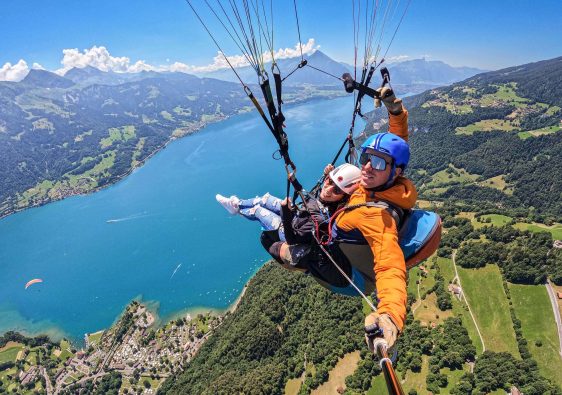
Paragliding, on the other hand, involves a fabric wing that inflates with air, much like a parachute. The entire setup—wing, harness, reserve parachute, helmet—packs into a large backpack, easily portable for hike-and-fly adventures, weighing around 25-40 pounds. Setup takes a mere 5-10 minutes. Launching is a more gentle affair; you lay out the wing, inflate it over your head, and jog a few steps into the wind. In flight, you’re seated upright, suspended beneath the wing, with a more intimate, ‘sitting in an armchair’ sensation. Speeds are slower, typically 18-25 mph, making the experience feel more serene but also more susceptible to significant air turbulence.

One common mistake I’ve seen beginners make is underestimating the physical demands of a hang glider launch. I once coached a student who was very athletic but struggled with the precision and coordinated effort needed to run with 60 pounds of glider on his shoulders while maintaining directional control. He quickly realized the portability and simpler launch of a paraglider suited his desire for quick, spontaneous flights more. Conversely, I’ve seen pilots drawn to paragliding’s portability later crave the speed and ‘attack-the-sky’ feel of a hang glider, especially when trying to cover long distances or punch through strong headwind. Each offers a distinct engagement with the air.
The Learning Journey: Safety, Skill, and Pilot Demands
The path to becoming a solo pilot in either sport is rigorous and demands respect, but the initial learning curves differ. For hang gliding, the early stages focus heavily on ground handling, building muscle memory for running with the glider, controlling pitch and roll before leaving the ground, and practicing consistent, controlled landings. This phase can feel slower and more repetitive, as getting airborne in a controlled manner is the first major hurdle. However, once you’re successfully launching and soaring, the inherent stability of the hang glider can make high-altitude flight feel incredibly secure, even in turbulent air, due to its higher wing loading and rigid structure.
Paragliding’s learning curve often feels faster initially. Students can get off the ground and fly short distances relatively quickly, which can be exhilarating. However, this apparent ease can be deceptive. A paraglider wing is constantly changing shape and reacting to the air, requiring more active piloting and constant micro-adjustments. Understanding how to manage wing collapses—which are rare but can happen in strong turbulence—and recover quickly is a critical skill that requires ongoing practice and airtime. The margin for error in rapidly changing air conditions can feel smaller, demanding a heightened awareness and quicker reaction time from the pilot.
Many aspiring pilots mistakenly think paragliding is inherently ‘safer’ due to its perceived simplicity. In my experience, while launching is often easier, paragliding demands constant, active piloting to manage the wing’s response to changing air, making mastery a lifelong pursuit. Don’t mistake ease of launch for ease of mastery.
Key insight: Initial simplicity doesn’t equate to overall safety or easier mastery; each sport has unique demands.
A classic beginner mistake I’ve witnessed too often is the assumption that because a paraglider can be packed into a backpack, it’s somehow less serious or requires less stringent training. I once had a student who, after a few successful sled rides on a paraglider, felt overconfident and attempted to fly in conditions beyond his skill level, leading to a minor incident. This reinforced my belief that while the barrier to entry might feel lower with paragliding, the mental discipline and ongoing commitment to understanding meteorology and airmanship are just as, if not more, critical than with hang gliding. Both sports punish complacency without prejudice.
Beyond the Basics: Cost, Community, and Personal Fit
When considering which path to take, practicalities like cost and local community support play a significant role. Generally, the initial outlay for a full paragliding setup—wing, harness, reserve, helmet, vario (a device that measures vertical speed)—can be lower, often ranging from $5,000 to $9,000 for new equipment. Hang gliding gear, including the glider, harness, reserve, and instruments, typically starts higher, from $8,000 to $15,000, and often requires a vehicle equipped for transport. Training costs for both are substantial, ranging from $2,000 to $5,000 or more, depending on the school and your pace of learning.
Accessibility to flying sites is another major factor. Paragliding boasts a greater number of launch sites globally because its lighter, more compact gear and less demanding launch requirements mean it can be flown from a wider variety of hills and mountains, often allowing for hike-and-fly adventures. Hang gliding, due to its size and setup, often requires more specific, larger launch zones, or the availability of aerotow services. Before committing, always research the active flying communities and schools in your geographic area. A strong local club offers mentorship, shared rides, and invaluable site knowledge, which is crucial for safety and progression in either sport.
Your personal temperament and what you seek from the experience are perhaps the most important considerations. Do you dream of fast, exhilarating flights, covering vast distances at speed, feeling the wind rush over your prone body like a bird of prey? Then hang gliding might be your calling. Or do you envision a more meditative, intimate dance with the thermals, savoring every moment of flight, perhaps with the ability to hike to remote launches? Paragliding might be a better fit. I’ve seen pilots switch between the two over the years as their preferences evolved, but the most contented pilots are those who truly connect with their chosen craft.
Pro Tips from the Cockpit: Making Your Choice
After fifteen years of guiding aspiring pilots, I’ve distilled my advice into these actionable tips:
-
Pro Tip 1: Try a Tandem First.
This is non-negotiable. Before you invest a single dollar in lessons or gear, take a tandem flight in both a hang glider and a paraglider. It’s the most effective and cost-efficient way to experience the fundamental differences firsthand. The sensation of speed, the body position, the view—these are things no description or video can fully convey. I’ve seen countless individuals whose preconceived notions were completely flipped after a tandem flight. Sometimes, the one you thought you’d love isn’t the one that truly speaks to you.
-
Pro Tip 2: Assess Your Local Scene.
Your long-term enjoyment and safety depend heavily on the flying community and instructional resources available to you. Does your area have active hang gliding or paragliding clubs? Are there certified instructors nearby? What are the typical weather conditions and launch sites like? I’ve witnessed passionate individuals give up because the logistics of getting to a suitable launch or finding mentors proved too difficult. Choosing the sport with a robust local infrastructure will significantly enhance your learning experience and progression.
-
Pro Tip 3: Be Honest About Your Lifestyle.
Think beyond the flight itself. How much setup and breakdown time are you willing to commit? Are you fit enough to carry equipment up a hill? Do you have suitable vehicle transport? A paraglider’s backpack portability allows for hike-and-fly adventures and spontaneous trips, while a hang glider demands more planning and dedicated transport. Your personal logistics and willingness to manage the gear will directly impact how often you actually get to fly, and ultimately, how much you enjoy the sport.
I’ve seen countless beginners invest heavily in gear only to realize the sport isn’t for them. My advice, honed over years: a tandem flight is the cheapest and most effective way to truly feel the difference between hang gliding and paragliding. It bypasses theoretical debates and offers immediate, visceral insight into your preference.
Key insight: Experience both personally before committing; tandem flights are invaluable for informed decisions.
FAQ
Can I learn both hang gliding and paragliding?
Yes, absolutely! Many experienced pilots eventually learn and enjoy both disciplines. However, I strongly recommend mastering one discipline completely before transitioning to the other. The mental models for control inputs, although related, are distinct enough to cause significant confusion and potentially lead to unsafe habits if you try to learn simultaneously. Focus on becoming a proficient, safe pilot in one sport first, building a solid foundation of airmanship and weather knowledge. Once you’re confident and competent, then expand your horizons to the other.
Which sport has more fatality rates?
While statistics can vary by region and reporting methods, and specific figures can be misleading without context, both sports, when practiced within their limits and with proper training, are remarkably safe given the nature of free flight. The perception often skews based on high-profile accidents, which are tragic but statistically rare. From my perspective, the key differentiator in safety isn’t the inherent danger of the equipment itself but rather the pilot’s judgment, strict adherence to weather limits, continuous training, and respect for the environment. A beginner pushing limits in either a hang glider or a paraglider is far riskier than an experienced pilot navigating challenging conditions safely. It’s truly pilot-dependent.
Is one sport more physically demanding than the other?
Initially, hang gliding can be more physically demanding, especially during ground handling, setup, and particularly the launch phase. You’re supporting a heavier, bulkier airframe and often running swiftly down a hill. This requires good core strength, leg power, and coordination. Paragliding, while the gear is lighter and the launch more gentle, can still be physically demanding. Sustained ground handling in windy conditions requires significant core and leg strength to keep the wing overhead. If you’re planning on hike-and-fly (hiking to a launch site with your gear), then paragliding can be a strenuous cardio workout. Both require a reasonable level of general fitness, but the type of exertion differs; hang gliding often demands bursts of power, while paragliding can be more about sustained endurance and finesse.