 aktiv_admin
Why and When to Consider Using Hiking Sticks
Many hikers ponder whether adding hiking sticks to their gear is truly beneficial or merely an extra burden. The truth is, hiking sticks offer a wealth of advantages, transforming your trek from a simple walk to a more balanced, efficient, and safer experience across diverse terrains. This guide delves into the core reasons why these versatile tools might become an indispensable part of your hiking kit.
Understanding the Core Benefits of Hiking Sticks
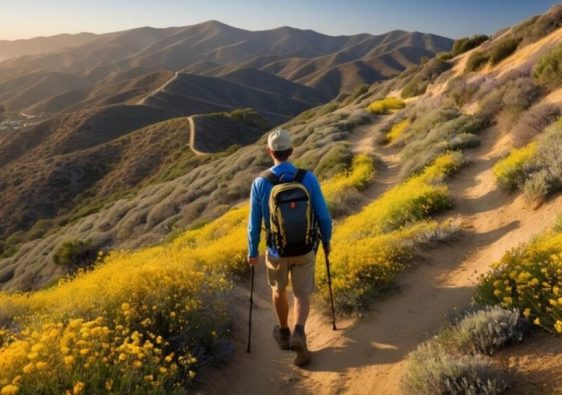
Hiking sticks are far more than just walking aids; they are sophisticated tools that enhance stability, reduce physical strain, and improve overall trekking performance. By distributing your effort and impact across four points of contact with the ground instead of two, they fundamentally alter your body’s mechanics on the trail.
One of the primary advantages is significant joint relief. Descending steep trails puts immense pressure on your knees and hips. Hiking sticks absorb a considerable portion of this impact, effectively acting as shock absorbers and reducing the stress on your lower body joints. This can prevent pain, fatigue, and long-term wear and tear, making long hikes more enjoyable and sustainable.
Optimizing Stability and Balance on Diverse Terrains
Navigating uneven ground, slippery surfaces, or rocky paths demands superior balance. Hiking sticks provide two additional points of contact with the ground, dramatically increasing your stability and reducing the risk of falls. This is particularly crucial when crossing streams, traversing snowfields, or scrambling over boulders. They act as extensions of your body, offering immediate support exactly where and when you need it.

Moreover, on ascents, hiking sticks can help propel you upwards, engaging your arm and core muscles and reducing the burden on your legs. This not only conserves energy but also improves your rhythm and endurance, allowing you to maintain a steady pace. On descents, they offer critical braking support, preventing uncontrolled slides and providing a controlled, measured descent even on very steep grades.
Choosing and Using Your Hiking Sticks Effectively
Selecting the right hiking sticks involves considering material, adjustability, and grip. Lightweight aluminum or carbon fiber are common choices, with carbon fiber offering superior vibration dampening at a higher cost. Adjustable poles are essential for different terrains and user heights; ensure the locking mechanisms are reliable. Grips vary from cork (molds to hand, wicks sweat) to foam (soft, lightweight) to rubber (durable). Test various options to find what feels most comfortable and secure for your hands.
Proper technique is crucial for maximizing benefits:
- **Adjust Length:** On flat ground, your elbows should form a 90-degree angle when holding the grips with the tips on the ground. For uphill, shorten them slightly; for downhill, lengthen them.
- **Rhythm:** Swing your sticks with the opposite arm and leg, mimicking your natural walking gait. Plant the tip firmly beside or slightly ahead of your lead foot.
- **Descent:** Plant sticks slightly ahead of your body, using them to brace and control your descent, reducing impact on knees.
- **Ascent:** Plant sticks behind or beside your body, pushing off them to propel yourself upwards.
- **Straps:** Use wrist straps correctly by pushing your hand up through the loop from below, then grasping the grip along with the strap. This transfers weight to the strap, reducing grip fatigue.
Advanced Applications and When to Go Stick-Free
Beyond basic support, hiking sticks have advanced uses. They can be employed to test uncertain ground, probe snow depth, or even act as a tent pole for ultralight shelters. In emergencies, they can be fashioned into a splint or used to fend off small animals. However, there are instances when going without sticks is preferable. Technical scrambles or climbs where hands are needed for balance on rock require stowing your poles. Similarly, short, easy walks on well-maintained trails may not warrant their use. Always assess the terrain and your personal comfort.
Key Takeaway
For most hiking scenarios, especially those involving varied terrain, significant elevation changes, or heavier packs, hiking sticks offer substantial advantages in safety, endurance, and joint health, making them a worthwhile addition to any hiker’s gear.
- Enhanced balance and stability on uneven surfaces.
- Significant reduction of impact on knees and other joints.
- Improved propulsion and energy conservation on ascents.
- Critical braking and control on descents.
- Assistance in stream crossings and navigating slippery conditions.
- Versatile tool for testing terrain and emergency uses.
- Reduced fatigue during long-distance or multi-day hikes.
Common Mistakes to Avoid
- Using sticks that are incorrectly sized for your height.
- Forgetting to adjust stick length for uphill and downhill sections.
- Gripping the handles too tightly, leading to hand fatigue and blisters.
- Not utilizing wrist straps correctly, which transfers weight inefficiently.
- Failing to maintain or inspect locking mechanisms, leading to collapse.
- Dragging sticks rather than planting and lifting them rhythmically.
- Bringing sticks on highly technical terrain where hands are needed for scrambling.
FAQ Section
Do hiking sticks help with speed?
Yes, for many hikers, hiking sticks can contribute to increased speed and efficiency, particularly on varied terrain. By engaging your upper body and providing additional points of contact, they help maintain a consistent rhythm and propulsion, especially on ascents. This can lead to less fatigue in your legs and a more sustained pace over longer distances, indirectly increasing your overall speed.
Are hiking sticks only for older hikers or those with joint problems?
Absolutely not. While hiking sticks are incredibly beneficial for individuals seeking joint relief or additional stability, their advantages extend to hikers of all ages and fitness levels. Even young, fit hikers benefit from improved balance, reduced muscle fatigue, enhanced power on ascents, and decreased impact on joints, which can help prevent future injuries. They are a universal tool for trail efficiency and safety.
What’s the difference between hiking sticks and trekking poles?
The terms “hiking sticks” and “trekking poles” are often used interchangeably and generally refer to the same item: adjustable poles used for stability and support while walking or hiking. Historically, “hiking sticks” might have referred to more traditional, often wooden, single staffs, while “trekking poles” implied a pair of lightweight, adjustable, and often collapsible poles. Today, the modern, pair-based, adjustable aluminum or carbon fiber poles are typically called trekking poles, but using “hiking sticks” to describe them is also common and widely understood.